
From The Archive | Episode 1: The Move To The Rose Bowl
As we celebrate 25 Years of The Bowl, we uncover the stories behind the venue’s journey.

In 1985 the fire at Bradford City’s Valley Parade Stadium led to a new impetus for ground safety and resulted in the Popplewell Report. This was followed by the Hillsborough stadium disaster (April 1989) and the Taylor Report. Although the focus was on football grounds and crowds for domestic matches far bigger than Championship cricket, crowds for international and limited-overs cricket were larger. In addition, almost all major cricket grounds including Hampshire’s were Victorian, often with old stands and other facilities close to town and city centres, while spectators were increasingly inclined to travel by private cars to grounds and locations with limited parking.
In 1986 Tony Baker succeeded AK ‘Jimmy’ James as Hampshire’s Chief Executive and began exploring but was advised to look elsewhere. In 1987, Mark Nicholas, Wilfrid Weld and Bill Hughes had their dinner discussion at Headingley about exploring a move away from Northlands Road, and Nicholas says by the next day Hughes had “drawn up some plans” and on the return to Southampton he and Tony Baker began a search for land adjacent to M27.
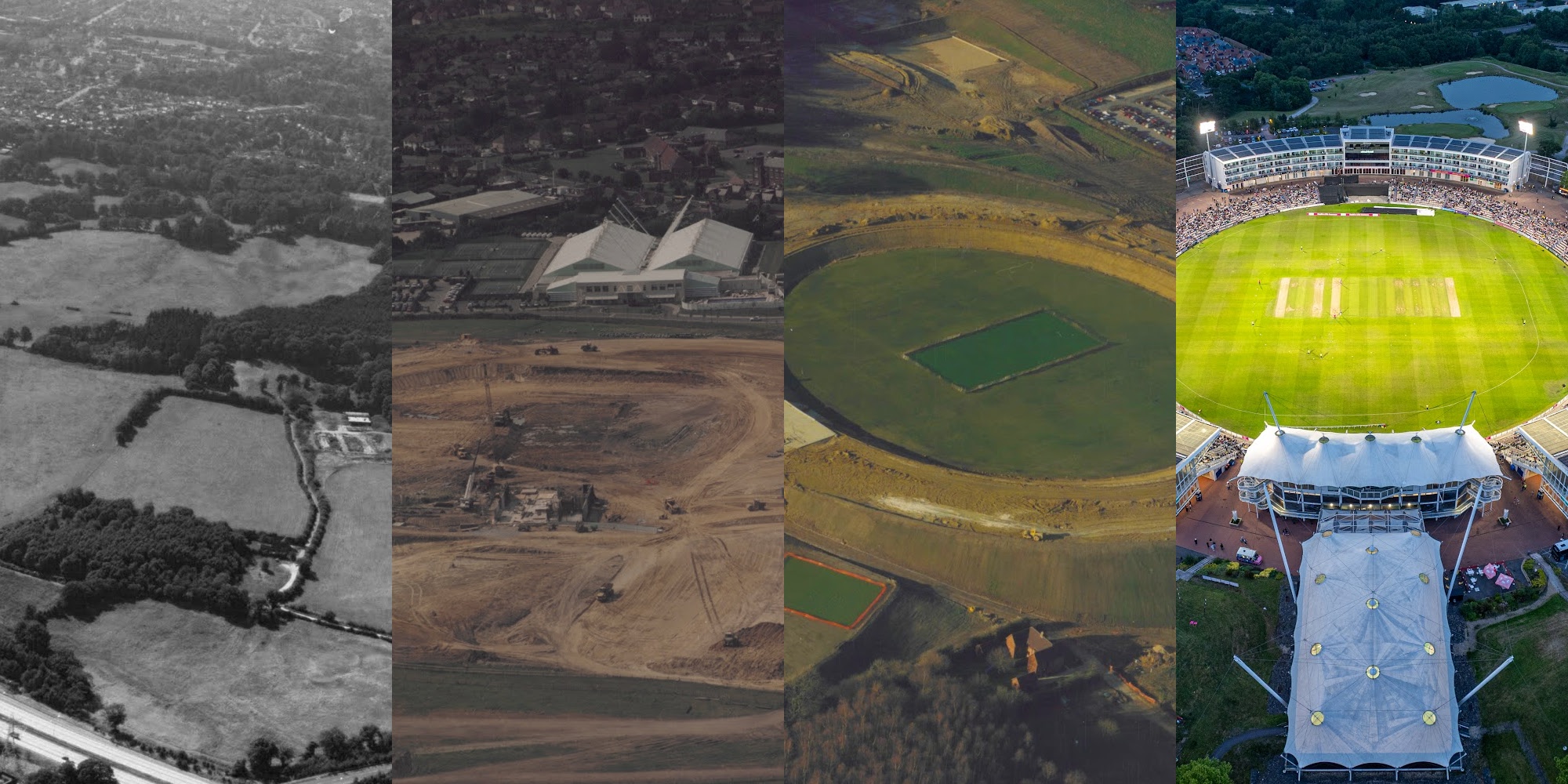
In 1988 the Committee wrote to 6,000 members and began a feasibility study, (June) they found the West End site, owned by Queens College, Oxford and (October) Queens College offered the land on 999-year lease. Eastleigh Borough Council granted planning permission for the main and nursery grounds. Property prices were high, and the project could be funded by the sale of Northlands Road, worth perhaps about £10 million at the time. But then the market crashed, the value shrank to £3 million. Nonetheless detailed negotiations continued, and Queens College sought vacant possession.
In the February 1990, in the Hampshire Members’ Newsletter, first edition, it was stated by the club: “The present target date for first-class cricket at the new headquarters is 1995”. In October, a second edition confirmed much work had been done but “the difficult economic climate … has inevitably slowed progress”. The next newsletter in February 1991 confirmed continuing legal negotiations between college and local authority. The club’s architects prepared a detailed planning application. By November that year, the latest newsletter reported “the recession and the persistent depressed state of the property market have prevented any significant progress”. The two bi-annual newsletters in 1992 made no mention of the project. Hampshire played their last (home) match at Dean Park (Nat West v Dorset).
In November 1994, the club reported better news: the 999-year lease was signed in October and new architects appointed. The club would seek National Lottery funding. In early 1995, a 50-page application for Lottery funding was submitted at the start of the Championship centenary year – an appeal was launched to raise funds. The March 1995 newsletter showed the architect's drawing of new ground, and a 3-D model was displayed at the ground that season. In the Daily Telegraph (15.5.95) Christopher Martin-Jenkins wrote “Hampshire are waiting optimistically for the next announcement” but it would not come for 15 months. (November) A new application was submitted following meetings with the Sports Council. On 12th August 1996, The National Lottery awarded the project £7, 176, 728 – the largest award from that source in cricket and in the southern area.
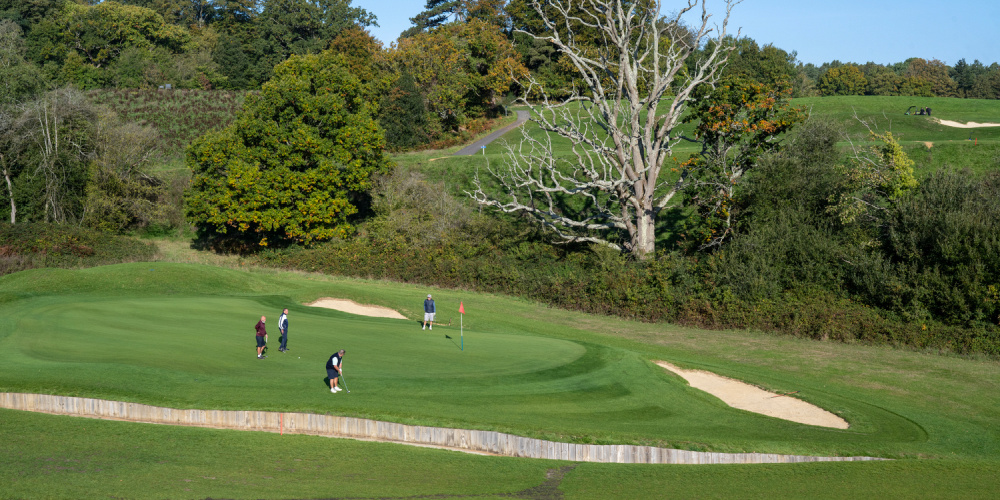
In March 1997, there was a ceremonial cutting of the first turf and the timetable was set out for earthworks to begin. During the season 20 pitches were sown on the square. The first opportunity for members to see the ground was postponed because of very wet weather in March 1998. They went in September although it rained again. (25 February) Closing date for bids to purchase Northlands Road with vacant possession from 31 October 2000. It was sold to Berkley Homes for £5+ million with built-in increases in the event of rising property prices. The final figure was £5,735,000. In December 1998, work began on the West End golf course and nursery ground pavilion. Work was halted, though, in the summer of 1999, when the contractors Grist Construction went into liquidation. The golf course opened.
Rod Bransgrove was elected to the Committee in 1999 and almost immediately found himself in control of the project, firstly replacing Brian Ford as Chairman then at a moment of real crisis enabling the share issue and funding needed – as Tennant’s subtitle has it, he “saved Hampshire from extinction”. In terms of the original vision, he was able to take what had stalled, perhaps terminally and ran with it over a quarter-of-a-century to the point of stability and more, which is where it is now. He achieved that not least through a new ‘vision’ for organising and leading county cricket, which could no longer be dependent on the willing but sometimes inexperienced and usually time-constrained voluntary committee members, elected by a membership which itself often lacked requisite knowledge and experience. When Hampshire ceased to be a county cricket club it was a radical step but in these days of franchise sales and boards replacing committees, it looks increasingly like the way things are going in many county clubs Bransgrove led the way with this vision.
In January 2000, work began on the main pavilion, atrium, and academy. In May 2000, Trevor Brooking, chairman of Sport England, opened the clubhouse and nursery ground and (6 June) he returned to watch the first day of the inaugural three-day Rose Bowl match between Hampshire and Sussex 2nd XIs. Sussex won. A few weeks later, Hampshire 2nd XI played their first match on the main ground, still a building site, against Glamorgan 2nd XI. There were delays in construction, a collapsed steel mast over the academy and the 12 months from March 2000 were the wettest on record. Meanwhile, the sums awarded originally did not allow for significant inflation in the construction industry, adding an estimated £2+ million to costs. Amendments had to be made. Hampshire played their last ever games at Burnaby Road and Northlands Road in 2000. In October, Brian Ford resigned as Chairman and was replaced by Rod Bransgrove, a locally-based businessman who had recently been elected to the Committee and after almost 140 years, the last such representative to be chosen by the membership.
On becoming Chairman, Bransgrove announced he would review “almost every aspect of the entire development” and, in February 2000, the elected Committee, acknowledged that the increasingly complex project could no longer be carried forward by busy part-time men. A well-attended AGM in Southampton in March approved the proposal to change Hampshire County Cricket (members’) Club to a privately-owned company limited by shares. Among the ‘safeguards’ was a ‘golden share’ to protect the interests of Hampshire CCC members. The Chairman underwrote a guaranteed £4m share placing. In 2016, Mark Nicholas later wrote in 2017, “Rod Bransgrove, a true fan of the team and a successful businessman saved Hampshire County Cricket Club from ruin with his own money”.
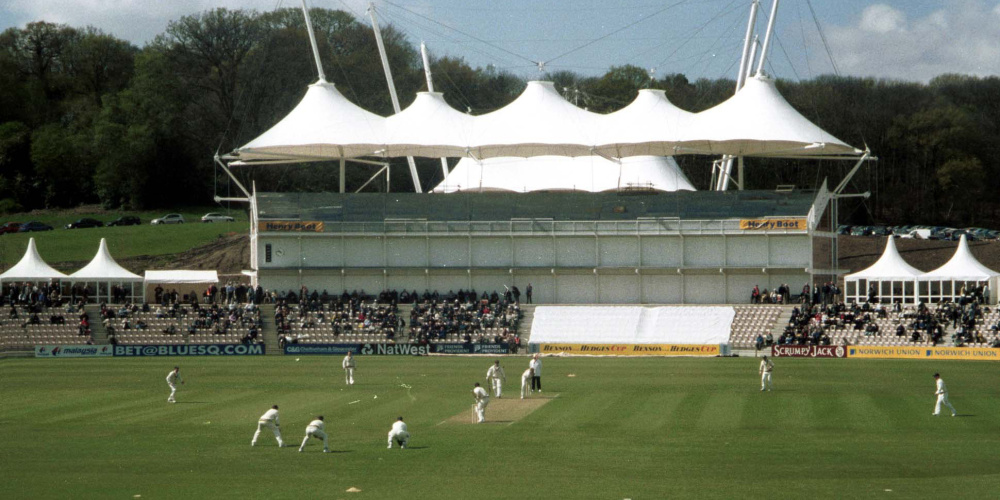
The final cost of the Rose Bowl was now estimated at £24m in 2001, of which approximately £5m was still required after the latest round of funding. This needed to be found from sources such as a ground sponsor to allow the pavilion to be completed and facilities such as a media centre to be built. During the late 1990s Hampshire employed someone to seek a major name sponsor, but with no guarantee of regular international exposure this took more than a decade to secure, so it remained the Rose Bowl. Just ahead of the first season, 69 trees around the edge of the ground had been sponsored through the Hampshire Rose Bowl Appeal, the majority by individuals plus 11 organisations. The much-anticipated first game was scheduled for the 2nd May 2001 against Essex in the Benson and Hedges Cup. It was abandoned without a ball bowled, but that only heightened the excitement of playing and watching cricket at this huge new arena. Two days later, Robin Smith won the toss and elected to lead the first ever Hampshire on to the field to bowl first against Surrey. Dimi Mascarenhas delivered the first ever delivery on the ground in a first team game to Mark Butcher.
Throughout 2026, 25 Years of The Bowl will be marked through a series of celebrations reflecting the venue’s history, people and progress.
One of the headline moments of the anniversary year comes on Friday 29 May, as Hampshire Hawks v Surrey brings the Party Like It’s 2001 theme to life with a retro-themed Vitality Blast double header at Utilita Bowl.
Together, these moments will celebrate 25 years of The Bowl - past, present and future.
As we celebrate 25 Years of The Bowl, we uncover the stories behind the venue’s journey.
Connect It Utility Services, a Southampton-based services company, will continue as the front of shirt sponsor of Hampshire Cricket’s limited overs sides in 2026.
View the latest scorecard from Hampshire men's pre-season friendly against Middlesex